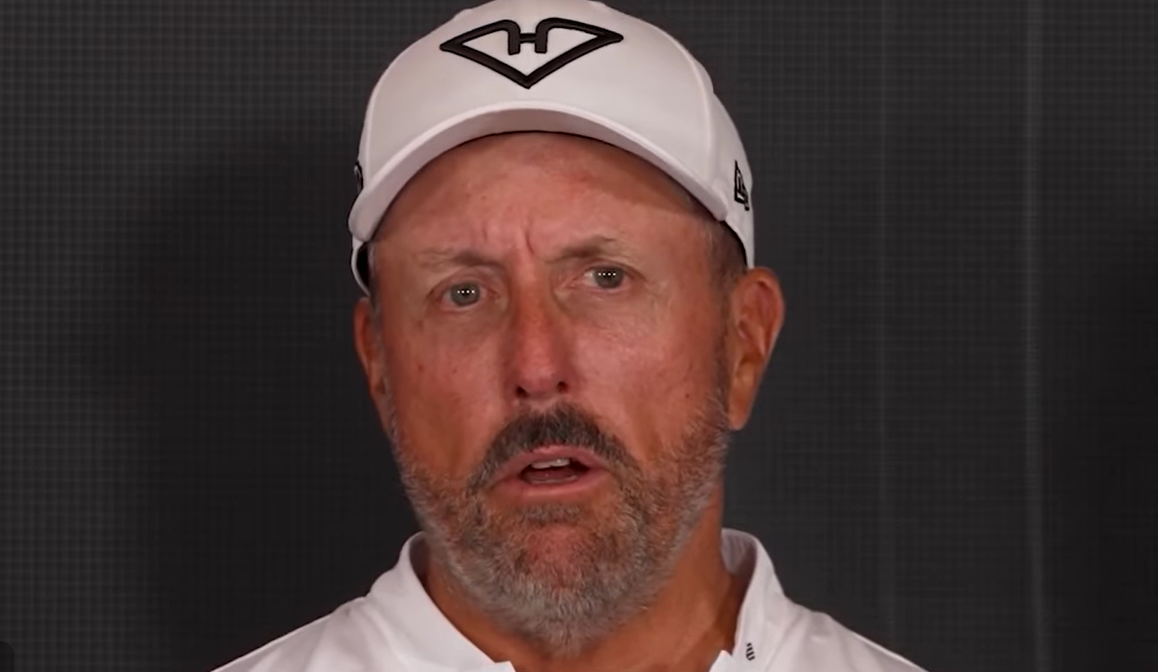
After four years, billions of dollars, and an ugly civil war in professional golf, Saudi Arabia’s Public Investment Fund has decided it has seen enough. LIV Golf, the tour that was supposed to shake the foundations of professional sport, is now scrambling for survival after its sovereign backer walked away. The story of how it got here raises an uncomfortable question that was always lurking in the background: was LIV Golf ever actually meant to be a business at all?
The answer, increasingly, looks like no. And that realization carries implications far beyond golf.
Sportswashing: The Quiet Business Plan
To understand what LIV Golf really was, you have to understand sportswashing, a term that entered mainstream conversation largely because of this saga. Sportswashing is the use of high-profile sports investments to rehabilitate or reframe a country’s international reputation, diverting attention from human rights abuses, political repression, or geopolitical aggression. Saudi Arabia had compelling reasons to pursue it.
The 2018 murder of journalist Jamal Khashoggi inside the Saudi consulate in Istanbul had put Crown Prince Mohammed bin Salman under sustained international scrutiny. Saudi Arabia’s conduct of the war in Yemen had drawn condemnation from human rights organizations worldwide. The Kingdom needed a reputational reset, and sports offered a proven playbook. The UAE had used Manchester City to spectacular effect. Qatar was building toward a World Cup. Formula 1 had a race in Jeddah. The logic of adding a global golf tour was straightforward: buy proximity to beloved institutions, familiar faces, and weekend leisure, and slowly launder the association.
From this vantage point, spending $5 billion on a golf tour is not irrational at all. It is actually quite cheap for a nation-scale PR campaign running over four years. No conventional advertising or lobbying effort could have generated the volume of international media coverage, the debates on prime-time sports television, or the association with superstar athletes that LIV produced. The fact that those debates often centered on the ethics of the Saudi investment was almost beside the point. The name “Saudi Arabia” was in hundreds of millions of conversations it would otherwise never have entered.
LIV’s architect, PIF governor Yasir Al-Rumayyan, was not building a sports business. He was buying a seat at the table of global sport, and for a time, it worked.
The Numbers That Never Made Sense for a Real Business
Here is the thing about genuine sports businesses: they are built to eventually make money. The economics of LIV never remotely pointed in that direction.
The tour failed to secure Official World Golf Ranking recognition, which made it irrelevant to players focused on major championship qualification. It could not attract meaningful television audiences. Ticket sales at many events were underwhelming. No significant media rights deals materialized. Yet the spending never stopped. Losses ran an estimated $500 million to $600 million per year, with total investment from PIF exceeding $5 billion over the tour’s lifespan.
A rational private investor walking into those numbers at any point in LIV’s history would have demanded a credible path to profitability or pulled out immediately. PIF showed no such discipline, because the financial return was never the primary metric. The return was geopolitical. When geopolitics changed, the rationale evaporated overnight.
The cracks went public in late 2025. Brooks Koepka, one of LIV’s flagship signings, left a year before his contract expired and returned to the PGA Tour. Patrick Reed followed. By April 2026, multiple outlets including the New York Times, the Wall Street Journal, the Financial Times, and The Athletic all reported the same conclusion: PIF was withdrawing its funding after the 2026 season.
LIV CEO Scott O’Neil initially pushed back, insisting the league was “fully funded through the end of the year” and would continue “at full throttle.” But when pressed about 2027 and beyond, his language revealed the reality. An interview in which he said he had to “work like crazy to keep it going” was deleted from social media within hours. Events were postponed. Al-Rumayyan stepped down. Reports emerged that players and vendors had not been paid. The league announced it was seeking outside investors, which is the corporate equivalent of a going-out-of-business sign.
The Sportswashing Calculation Collapsed With the Region
Timing matters here. Saudi Arabia did not walk away from LIV because the league was losing money. It was always losing money. PIF walked away because the geopolitical utility of the investment had expired, and because the financial environment in which PIF operates had deteriorated sharply.
The Iran war changed everything. A conflict that shattered the carefully curated narrative of a stable, modernizing Middle East cannot be offset by a golf tour. When luxury hotel bookings in the Kingdom dropped an estimated 45% in the first two weeks of March 2026, when more than 23,000 regional flights were cancelled, when potential tourists and foreign investors began visibly retreating, the soft-power calculation underlying LIV became almost absurd. No amount of Bryson DeChambeau content was going to move the perception needle when missile strikes were disrupting Dubai’s airport.
At the same time, PIF’s own balance sheet was under genuine pressure. Saudi Arabia’s public debt reached $405 billion at the end of 2025, up from $324 billion the prior year, a debt-to-GDP ratio six times higher than it was in 2015. Aramco, the fund’s primary income source, has seen profits fall for 11 consecutive quarters. PIF’s cash reserves had hit their lowest level since 2020. Against that backdrop, $500 million per year on a geopolitically useless golf tour became genuinely indefensible.
But LIV Is Not the Whole Story. It Might Not Even Be the Biggest Story.
What LIV’s collapse signals is something far larger than professional golf. It is one visible data point in a broader pattern of Saudi Vision 2030 overreach that is now being forced into a painful reckoning.
Consider the portfolio of projects that shared LIV’s underlying logic, namely the idea that you can build destination, prestige, and demand through sheer force of sovereign capital:
NEOM’s “The Line,” a $500 billion, 170-kilometer linear city in the desert, was supposed to redefine urban civilization. Satellite images from mid-2025 showed a vast scraped corridor and not much else. Construction was suspended and the project was not mentioned in the 2026 Saudi budget. PIF recorded an $8 billion writedown across its giga-project portfolio over just three years.
The Red Sea luxury resort project aimed to attract one million tourists annually and transform Saudi Arabia into a rival to the Maldives. A senior executive at Red Sea Global stated plainly that “current operating costs exceed revenues in a way that has become unsustainable.” Sources confirmed that construction will halt at the end of 2026, with Phase One now being treated as a “proof of concept.” The Iran war then accelerated the collapse of demand the project was already struggling to generate.
NEOM pulled out of hosting the 2029 Asian Winter Games at Trojena, its under-construction ski resort in the mountains, after reported construction problems. The value of construction contracts awarded by Saudi authorities plunged 72% year on year in the second quarter of 2025.
These are not minor setbacks or ordinary project delays. They represent a systemic failure of a specific investment thesis: that global demand for luxury tourism, world-class sport, and futuristic urbanism can be manufactured in a geopolitically volatile region through top-down capital deployment, on an accelerated timeline, without organic demand to underpin it.
One government source, quoted anonymously, cut to the heart of it: “The consensus is that it’s impossible to work on all these projects at the same time.”
The Deeper Flaw in the Model
There was always a foundational problem with Vision 2030’s most ambitious bets that LIV Golf illustrates perfectly. You cannot create demand from the supply side alone. Golf fans did not want a new circuit without world ranking points. Luxury tourists do not choose destinations because a sovereign wealth fund has built hotels there. They choose destinations because the destination has earned its appeal over decades, because it feels safe, because the culture invites them, because the brand is real and not constructed.
Dubai took 30 years to build its global brand, and it had geography, a genuine trade hub, and sustained political stability working in its favor. The Saudis attempted to compress that journey into a decade while simultaneously carrying the reputational weight of Khashoggi, Yemen, and now a regional war.
As one analysis noted, the scaling back of Vision 2030 giga-projects “amounts to an acknowledgment that the Kingdom had promised more than any nation could actually deliver.”
The Pivot and What It Reveals
Saudi Arabia’s response to these failures has been a sharp pivot toward AI infrastructure, through a new venture called HUMAIN, with major partnerships announced with NVIDIA, Amazon Web Services, and Blackstone. This is a smarter bet on paper: data centers produce returns within 12 to 18 months, do not require tourists to feel safe flying into Riyadh, and do not depend on building cities in deserts.
But the pivot itself is revealing. A sovereign wealth fund managing nearly $1 trillion in assets should not need to make emergency course corrections of this magnitude. The scale of the retreat from LIV, from NEOM, from the Red Sea project, and from a long list of other giga-projects suggests that the original Vision 2030 strategy was constructed more around MBS’s ambition and the Kingdom’s image needs than around disciplined investment analysis.
LIV Golf was the most visible expression of that problem. A real business does not lose $500 million a year for four years without a plausible path to recovery and call it a strategy. A sportswashing operation does. The difference matters now, because the bills are coming due, the region is at war, the oil price required to balance the Saudi budget is well above where markets have priced it, and the $8 billion writedown on giga-projects is almost certainly not the final number.
It also highlights the challenge of having too much money, and having it in the hands of a corrupt regime where the decision-maker rose to power through his family connections and ruthless purging of rivals. Is anyone suprised they’re screwing this up?
What the Golf World Can Take From This
The PGA Tour emerges from this period stronger than it entered it. Forced to compete with unlimited capital, it raised purses, restructured its schedule around premium events, and secured private investment. It is more commercially sophisticated today than it was in 2021.
LIV’s players face a far more uncertain future. Koepka returned and was welcomed. Others face a PGA Tour that has made clear the window for easy re-entry has closed, and that future reinstatement will happen on the Tour’s terms. Jon Rahm and Bryson DeChambeau passed on the Returning Member Program and now find themselves holding contracts with a tour that may not exist in meaningful form beyond 2026.
The larger lesson, though, belongs to anyone studying sovereign investment strategy. Sportswashing has a shelf life. It works until the geopolitical problem it was designed to paper over becomes too large for any sports investment to contain. At that point, you are left with the financial residue of a strategy that was never really about returns, in a fiscal environment that suddenly requires them.
When the checks stop, so does everything else. Saudi Arabia is finding that out in golf. The harder question is how many of its other $840 billion in Vision 2030 investments are built on the same fragile foundation.
