Author: Staff (Page 22 of 27)

NFL lockout is back on

The National Football League logo is displayed near the stage during round one of the 2011 NFL Draft Pick at Radio City Music Hall on April 28, 2011 in New York City. UPI/Monika Graff

The NFL lockout is back on.

The NFL, after a series of legal setbacks, got a breather Friday when a federal appeals court put the lift of the lockout on hold.

The U.S. 8th Circuit Court of Appeals granted the league’s request for a temporary stay of the injunction issued Monday by U.S. District Judge Susan Richard Nelson, who had ordered an end to the 45-day lockout.

The 8th Circuit granted a short stay in order to have time to consider a longer one. The NFL is appealing Nelson’s decision and wants the right to keep the lockout in place while that appeal is being decided.

Jim Quinn, an attorney for the players, said in an email that the stay from the 8th Circuit was “routine and totally expected.”

This mess is on full display as the NFL is going through its annual draft.

The owners created this fiasco by pushing for the lockout, and then the NFLPA raised the stakes by bringing the dispute to court. Now anything can happen.

Obama discusses energy policy

U.S. President Barack Obama delivers remarks on his energy strategy at Georgetown University in Washington, March 30, 2011. REUTERS/Jim Young (UNITED STATES – Tags: POLITICS ENERGY BUSINESS)

President Barack Obama gave a speech today on his energy strategy at Georgetown University in Washington. He addressed some of the recent controversy regarding domestic oil production, noting that oil production is at an 8-year high in the US, and that we can insist on safety with sensible regulation and still produce oil from offshore sites.

Obama urged oil companies to make greater use of the federal leases both onshore and offshore to prop up domestic oil output. The oil industry and GOP lawmakers have been loudly complaining about delays in the permitting of offshore drilling in recent months. But an irked administration, which had pledged tougher scrutiny of drilling applications after last year’s massive Gulf of Mexico oil spill, fired back Tuesday with an Interior Department report that revived earlier debates about whether oil companies were exploiting the leases they already have.

Obama has made energy a priority since taking office, with the increase in automobile fuel efficiency marking perhaps his greatest impact. As part of the economic stimulus package adopted in 2009, he also won about $70 billion in grants and loan guarantees to promote energy efficiency, advanced batteries for cars and renewable energy. He has said that in addition to energy benefits those monies will create what he calls “green jobs.” But he poured a large amount of effort into winning passage of a cap-and-trade climate bill, which failed.

TARP was a huge success

Robert Samuelson is a grouch. Nobody would ever accuse him of looking at the sunny side of things, particularly when it comes to budgetary matters.

With that in mind, here’s his sober assessment of TARP.

It isn’t often that the government launches a major program that achieves its main goals at a tiny fraction of its estimated costs. That’s the story of TARP — the Troubled Assets Relief Program. Created in October 2008 at the height of the financial crisis, it helped stabilize the economy, used only $410 billion of its authorized $700 billion and will be repaid most of that. The Congressional Budget Office, which once projected TARP’s ultimate cost at $356 billion, now says $19 billion. This could go lower.

Almost everyone loves to hate TARP. It’s a favorite political sport of liberals, conservatives, Republicans, Democrats — and the public. A Bloomberg poll last October asked how TARP had affected the economy. The results: 43 percent said it weakened the economy; 21 percent said it made no difference; only 24 percent said it helped, with 12 percent unsure one way or another. Commentators in newspapers from The Wall Street Journal to The New York Times disparage TARP.

Wrong.

One lesson of the financial crisis is this: When the entire financial system succumbs to panic, only the government is powerful enough to prevent a complete collapse. Panics signify the triumph of fear. TARP was part of the process by which fear was overcome. It wasn’t the only part, but it was an essential part. Without TARP, we’d be worse off today. No one can say whether unemployment would be 11 percent or 14 percent; it certainly wouldn’t be 8.9 percent.

That benefited all Americans. TARP, says Douglas Elliott of the Brookings Institution, “is the best large federal program to be despised by the public.”

This demonstrates just how out of touch many Americans are these days. Sure, there’s plenty of justifiable anger. But this program served its purpose.
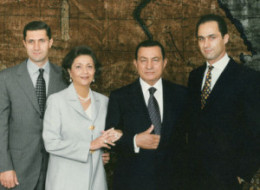
Will Mubarak be able to keep his fortune?

Now that Hosni Mubarak has stepped down as dictator President of Egypt, it will be fascinating from a business a criminal point of view to see what happens to the fortune he has amassed on the backs of his people.

But over the last 20 years, Mubarak, his family and his close circle of advisers have enriched themselves through partnerships in powerful Egyptian companies, profiting from their political power, according to numerous reports. The 82-year-old leader and his two sons also wield the levers of the government, including the military and the country’s preeminent political party, to reward friends and punish enemies.

Mubarak — who stepped down on Friday in the wake of massive protests that have gripped Cairo and Alexandria for weeks — and his family have a net worth of at least $5 billion, analysts tell The Huffington Post. Recent media reports pegging the family fortune at between $40 and $70 billion are considered to be exaggerated.

Much of their fortune has reportedly been invested in offshore bank accounts in Europe and in upscale real estate. On Friday, Switzerland froze accounts possibly belonging to Mubarak and his family, a spokesman told Reuters, under new laws governing ill-gotten gains. Last month, the Swiss froze the accounts of Mubarak’s ally, ousted Tunisian president Zine El Abidine Ben Ali, whose overthrow inspired the first protests in Cairo.

The family owns tons of real estate throughout Europe and the rest of the world, along with stakes in numerous companies.

If Switzerland starts getting tough with them, there will be pressure for the rest of the world to do so as well. This will likely get ugly . . .

Chrysler generates buzz with Super Bowl commercial

Chrysler’s two-minute Super Bowl commercial for the new Chrysler 200 featuring scenes of Detroit and with an appearance by Eminem is getting plenty of buzz. It’s two minutes long and quite compelling. The comeback story for the company fits with the concept of a rust best city trying to come back as well. I wonder if the workers at Chrysler and GM will be sending thank you notes to President Obama for saving the companies?

« Older posts Newer posts »