Page 23 of 28

TARP was a huge success

Robert Samuelson is a grouch. Nobody would ever accuse him of looking at the sunny side of things, particularly when it comes to budgetary matters.

With that in mind, here’s his sober assessment of TARP.

It isn’t often that the government launches a major program that achieves its main goals at a tiny fraction of its estimated costs. That’s the story of TARP — the Troubled Assets Relief Program. Created in October 2008 at the height of the financial crisis, it helped stabilize the economy, used only $410 billion of its authorized $700 billion and will be repaid most of that. The Congressional Budget Office, which once projected TARP’s ultimate cost at $356 billion, now says $19 billion. This could go lower.

Almost everyone loves to hate TARP. It’s a favorite political sport of liberals, conservatives, Republicans, Democrats — and the public. A Bloomberg poll last October asked how TARP had affected the economy. The results: 43 percent said it weakened the economy; 21 percent said it made no difference; only 24 percent said it helped, with 12 percent unsure one way or another. Commentators in newspapers from The Wall Street Journal to The New York Times disparage TARP.

Wrong.

One lesson of the financial crisis is this: When the entire financial system succumbs to panic, only the government is powerful enough to prevent a complete collapse. Panics signify the triumph of fear. TARP was part of the process by which fear was overcome. It wasn’t the only part, but it was an essential part. Without TARP, we’d be worse off today. No one can say whether unemployment would be 11 percent or 14 percent; it certainly wouldn’t be 8.9 percent.

That benefited all Americans. TARP, says Douglas Elliott of the Brookings Institution, “is the best large federal program to be despised by the public.”

This demonstrates just how out of touch many Americans are these days. Sure, there’s plenty of justifiable anger. But this program served its purpose.

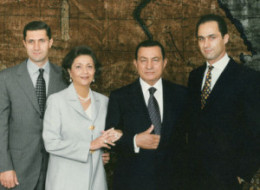
Will Mubarak be able to keep his fortune?

Now that Hosni Mubarak has stepped down as dictator President of Egypt, it will be fascinating from a business a criminal point of view to see what happens to the fortune he has amassed on the backs of his people.

But over the last 20 years, Mubarak, his family and his close circle of advisers have enriched themselves through partnerships in powerful Egyptian companies, profiting from their political power, according to numerous reports. The 82-year-old leader and his two sons also wield the levers of the government, including the military and the country’s preeminent political party, to reward friends and punish enemies.

Mubarak — who stepped down on Friday in the wake of massive protests that have gripped Cairo and Alexandria for weeks — and his family have a net worth of at least $5 billion, analysts tell The Huffington Post. Recent media reports pegging the family fortune at between $40 and $70 billion are considered to be exaggerated.

Much of their fortune has reportedly been invested in offshore bank accounts in Europe and in upscale real estate. On Friday, Switzerland froze accounts possibly belonging to Mubarak and his family, a spokesman told Reuters, under new laws governing ill-gotten gains. Last month, the Swiss froze the accounts of Mubarak’s ally, ousted Tunisian president Zine El Abidine Ben Ali, whose overthrow inspired the first protests in Cairo.

The family owns tons of real estate throughout Europe and the rest of the world, along with stakes in numerous companies.

If Switzerland starts getting tough with them, there will be pressure for the rest of the world to do so as well. This will likely get ugly . . .

Chrysler generates buzz with Super Bowl commercial

Chrysler’s two-minute Super Bowl commercial for the new Chrysler 200 featuring scenes of Detroit and with an appearance by Eminem is getting plenty of buzz. It’s two minutes long and quite compelling. The comeback story for the company fits with the concept of a rust best city trying to come back as well. I wonder if the workers at Chrysler and GM will be sending thank you notes to President Obama for saving the companies?

Business and labor support more infrastructure spending

President Barack Obama is applauded by Vice President Joe Biden and House Speaker John Boehner on Capitol Hill in Washington, Tuesday, Jan. 25, 2011, while delivering his State of the Union address. UPI/Pablo Martinez Monsivais/POOL

In his State of the Union speech last night, President Obama made a strong case for investments necessary for our future, particularly infrastructure spending. There will be a big battle with the GOP over any spending initiative, but the president is getting support from an unlikely pairing.

The U.S. Chamber of Commerce and the AFL-CIO, often bitter foes in conflicts between business and labor, released a rare joint statement Wednesday in support of President Barack Obama’s call for additional infrastructure spending.

The business lobby and union conglomerate’s respective leaders offered a united front in applauding the broad pitch for domestic development in Obama’s State of the Union address.

“America’s working families and business community stand united in applauding President Obama’s call to create jobs and grow our economy through investment in our nation’s infrastructure,” their joint statement reads. “Whether it is building roads, bridges, high-speed broadband, energy systems and schools, these projects not only create jobs and demand for businesses, they are an investment in building the modern infrastructure our country needs to compete in a global economy.

“With the U.S. Chamber of Commerce and the AFL-CIO standing together to support job creation, we hope that Democrats and Republicans in Congress will also join together to build America’s infrastructure.”

It will be interesting to see if momentum build for more spending in this area.

Tiger Woods loses Gillette endorsement deal

MELBOURNE, AUSTRALIA - NOVEMBER 11:  Golfer Tiger Woods (L) and cricketer Michael Clarke pose for a photograph during the launch of the Gillette Champions Junior Education Grant at the Crown Entertainment Complex on November 11, 2009 in Melbourne, Australia.  (Photo by Scott Barbour/Getty Images)

In the photo above we see Tiger Woods in happier times as he’s helping to pitch Gillette products. Since then times have changed and Tiger’s personal brand has been tarnished by scandal, and Gillette is the latest premium brand to end its relationship with Tiger Woods.

Procter & Gamble Co. will not renew its endorsement deal with Tiger Woods at the end of the year, adding another name to the list of companies that cut ties with the golfer after last year’s revelations of marital infidelities.

The company used Woods, Roger Federer, Lionel Messi and dozens of other athletes as part of its three-year “Gillette Champions” marketing campaign. Gillette said Thursday it was phasing out that program and not renewing the contract with Woods and several other athletes. It stopped using Woods himself in the campaign months ago.

This episode of course highlights the risks of celebrity endorsements though the Gillette campaign seemed like a pretty good one.

« Older posts Newer posts »